
The Miombo Woodlands

Introduction

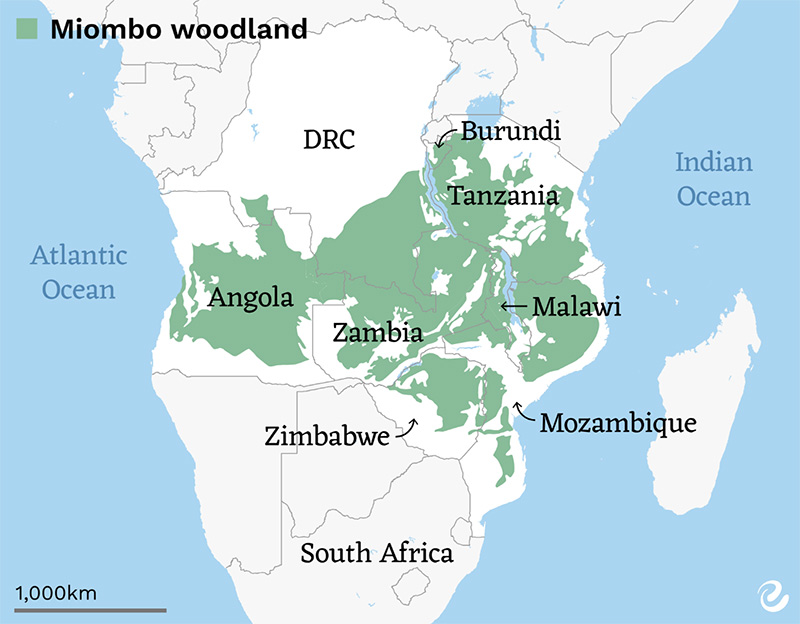
The Miombo woodlands represent one of Africa’s most ecologically significant and socially vital landscapes. Spanning over 2 million square kilometers across eight southern African nations—Angola, Democratic Republic of Congo (DRC), Burundi, Malawi, Mozambique, Tanzania, Zambia, and Zimbabwe—this ecosystem comprises the world’s largest dry forest formation. Named after the Brachystegia tree genus, Miombo woodlands support approximately 150 million people and harbor high levels of biodiversity, including thousands of endemic plant and animal species.


Ecological Characteristics

Biogeography and Climate

Miombo woodlands occur in a tropical to subtropical climate with distinct wet and dry seasons. Two major types of Miombo are recognized:
Wet Miombo

Found in regions receiving over 1000 mm of annual rainfall, including northern Zambia, eastern Angola, and western Tanzania. These areas support taller, denser tree canopies and more luxuriant undergrowth.

Dry Miombo

Occurs in areas with less than 1000 mm of rainfall annually, such as Zimbabwe, southern Malawi, and southern Mozambique. The vegetation is sparser, with shorter trees and a more open structure.

The soils are predominantly acidic, sandy, and nutrient-poor, which limits agricultural productivity and shapes the slow growth of Miombo species. Fire, herbivory, and human activity are key ecological drivers.


Flora and Fauna

Miombo supports approximately 8,500 plant species, over half of which are endemic to the region. Dominant trees include:

  • Brachystegia spp. (e.g., B. spiciformis)
  • Julbernardia globiflora
  • Isoberlinia angolensis

These form an open, discontinuous canopy with a grassy and herbaceous understory. The biodiversity includes:

  • Large mammals: African elephants, lions, leopards, African wild dogs, and black rhinos.
  • Birds: Miombo rock thrush, Miombo pied barbet, and Shelley’s sunbird—many of which are woodland specialists.
  • Reptiles and Amphibians: Numerous species adapted to dry woodland conditions.


Fire Ecology and Resilience

Natural and anthropogenic fires are frequent and often necessary for maintaining ecological balance. Many Miombo species have developed fire-resistant bark and resprouting capabilities. However, increasingly frequent and intense fires, driven by human land use and climate change, are beginning to outpace natural recovery processes.

Socio-Economic Importance

Livelihood Support and Subsistence Resources

The Miombo woodlands are essential to the daily lives of over 150 million people. For many rural communities, especially in Zambia, Tanzania, and Mozambique, these woodlands are the primary source of:

  • Fuelwood and charcoal, the latter being a major urban energy source.
  • Wild foods: fruits (e.g., Uapaca kirkiana), tubers, leafy vegetables, mushrooms.
  • Medicinal plants: Traditional medicine draws on over 300 identified species.
  • Honey production: Beekeeping is widespread and supports household incomes.
  • Construction materials: Timber and poles for homes and fencing.

In some communities, forest-derived goods account for over 90% of non-agricultural income.


Cultural, Spiritual, and Ecosystem Services

Miombo woodlands serve as:

  • Cultural sites: Locations for traditional rituals, burial grounds, and ancestral worship.
  • Hydrological regulators: Crucial for the Zambezi River Basin, they maintain water flow for agriculture and hydropower generation.
  • Carbon sinks: Sequestering approximately 0.5–0.9 tonnes of carbon per hectare annually, contributing to regional and global climate stability.
  • Soil protection and fertility: The woodland canopy and root systems reduce erosion and increase soil organic matter.

Conservation Challenges:
Accelerating Threats to the Miombo Woodlands

The Miombo woodlands are facing escalating environmental pressures that threaten their ecological integrity, biodiversity, and the livelihoods of millions who depend on them. These challenges are multifaceted, interconnected, and growing in intensity. Without urgent and coordinated responses, the degradation of the Miombo will accelerate, with regional and global consequences for climate stability, water resources, and food systems.


Deforestation: The Primary Threat

Extent and Rate of Loss
Between 2006 and 2021, Miombo woodland cover declined dramatically—from an estimated 2.7 million km² to 1.9 million km², representing a 30% reduction in just 15 years. The annual rate of deforestation now exceeds 1.27 million hectares, among the highest globally for tropical woodland ecosystems.

Key Drivers

  • Subsistence agriculture: Shifting cultivation and smallholder expansion remain the dominant causes of forest loss. Population pressures force communities to clear new plots every few years, as nutrient-poor soils quickly degrade.
  • Urban charcoal demand: In countries like Zambia, Malawi, and Mozambique, over 80% of urban energy needs are met by charcoal. Unsustainable harvesting has led to “charcoal frontiers”, where production shifts to remote forest areas, often within protected zones.
  • Commercial logging: Despite being low in commercial value per unit, Miombo hardwoods (e.g., Pterocarpus angolensis, Brachystegia spp.) are increasingly targeted for export to Asian markets, especially via illicit channels.
  • Large-scale land conversion: Agribusiness (e.g., sugarcane, soy, tobacco) and infrastructure projects (roads, hydropower dams, mining) lead to permanent deforestation and ecosystem fragmentation.


Feedback Loop
: Forest loss undermines the very services (water regulation, soil fertility, microclimates) that agriculture and human settlements depend upon, exacerbating poverty and driving further deforestation.


Land Degradation and Fragmentation

Even where tree cover remains, forest quality is declining:

  • Selective logging removes key canopy species, changing light regimes and microclimates.
  • Soil compaction and erosion follow grazing and overharvesting, reducing productivity and regeneration potential.
  • Invasive species (e.g., Chromolaena odorata) spread in degraded clearings, suppressing native vegetation.
  • Loss of large trees reduces habitat for pollinators, birds, and mammals, weakening ecosystem resilience.


This gradual degradation is often invisible in satellite imagery, but it has long-term impacts on biodiversity, carbon storage, and hydrology.


Climate Change: An Intensifying Pressure

Climate change acts as a force multiplier, worsening existing threats and introducing new stressors:

  • Longer, more intense dry seasons reduce water availability and increase tree mortality.
  • Frequent and severe droughts hinder seedling survival, limiting natural regeneration.
  • Increased fire frequency: Warmer temperatures and drier fuel loads have led to more frequent late-season fires, which are hotter and more destructive. Many Miombo species are fire-adapted, but only to specific regimes.


Climate modeling projects
that average temperatures across the Miombo ecoregion will rise by 1.5–2.5°C by 2050, while precipitation becomes more variable. These changes could shift the ecological balance toward grasslands, with irreversible effects.


Wildlife Decline and Poaching

Miombo ecosystems support diverse fauna, but habitat loss and poaching are driving population crashes:

  • Large herbivores and predators, including elephants and lions, are increasingly confined to protected areas.
  • Bushmeat hunting, driven by poverty and lack of protein alternatives, is widespread and often unregulated.
  • Bird and reptile populations are declining due to habitat fragmentation and illegal trade.
  • Illegal wildlife trafficking routes often overlap with illegal timber networks, complicating enforcement.


Governance Gaps and Institutional Challenges

Miombo countries often lack the governance capacity and financial resources to manage their forests effectively:

  • Weak enforcement of forest protection laws enables illegal logging and encroachment, even within national parks.
  • Limited community tenure rights discourage long-term stewardship of forests.
  • Policy incoherence—such as subsidizing charcoal or permitting land leases for agriculture in forest zones—undermines conservation goals.
  • Corruption and informal economies distort incentives and favor extractive over sustainable use.


Socio-Economic Pressures and Energy Poverty

The human dimension of forest degradation is often underestimated:

  • Over 60% of households in the Miombo region lack access to modern energy (electricity, gas), making biomass their only option.
  • Poverty and unemployment force communities to exploit forests for quick returns (e.g., charcoal, timber, land clearing).
  • Rapid urbanization, without energy planning, leads to surging charcoal demand in cities like Lusaka, Harare, and Maputo.
  • Lack of education and alternatives further reinforces dependence on unsustainable resource extraction.


Structural vulnerability
—poverty, weak governance, and lack of energy infrastructure—creates a system in which environmental degradation becomes both a consequence and a coping strategy.

Threatened Miombo Species and Environmental Consequences of Their Loss

The Miombo woodlands harbor some of Africa’s most unique and ecologically significant tree species. However, growing anthropogenic pressures have placed several of these species at risk of local extinction, with far-reaching implications for forest structure, ecosystem services, and biodiversity.


Causes of Species Decline
  • Selective Logging: High-value species like Pterocarpus and Afzelia are targeted for timber, often illegally, leading to population collapse.
  • Poor Regeneration: Fire regimes and overgrazing destroy seedlings; some species require decades or centuries to reach maturity.
  • Habitat Fragmentation: Roads, agriculture, and settlements break up species’ natural ranges, isolating populations and reducing gene flow.
  • Climate Sensitivity: Miombo trees evolved under stable dry-season cycles; rapid changes in rainfall patterns increase mortality and lower recruitment.


Ecological Consequences of Species Loss

The extinction or regional extirpation of Miombo tree species would have profound ecological consequences, including:

Disruption of Forest Structure
The loss of canopy dominants like Brachystegia and Julbernardia alters light penetration, soil moisture, and microclimate, potentially shifting ecosystems from woodland to grassland.

Collapse of Symbiotic Networks
Many tree species support specialized pollinators, mycorrhizal fungi, and seed dispersers. Their extinction can cause the co-extinction of dependent species, including birds, insects, and mammals.

Soil Nutrient Decline
Nitrogen-fixing and deep-rooting trees like Pterocarpus help maintain soil fertility. Their decline will worsen soil erosion, acidification, and desertification in nutrient-poor regions.

Loss of Carbon Sequestration Potential
Old-growth Miombo trees store 1.3–95.7 Mg of carbon per hectare. Their loss would not only reduce carbon sinks but also release carbon through decay and burning, exacerbating climate change.

Hydrological Instability
Tree loss disrupts rainwater infiltration and groundwater recharge, reducing dry-season water flow into rivers and wetlands, affecting both agriculture and urban water supply.

Cultural and Livelihood Erosion
Species with medicinal, spiritual, or material value are often irreplaceable in local traditions. Their disappearance contributes to cultural erosion and the loss of traditional knowledge.


Conservation Priorities for Threatened Species
  • Strengthen legal protection for priority species, including listing under CITES and national endangered species laws.
  • Enhance community-led seedling propagation and replanting for native species with poor regeneration.
  • Establish genetic reserves to conserve intraspecific diversity across climate gradients.
  • Promote alternative livelihoods and energy sources to reduce reliance on destructive harvesting.
  • Invest in monitoring and forest inventories to track species trends and habitat health.